Melamine, Laminate or Wood Veneer? How to Choose Closet Materials
What closet cabinetry is actually made of, how melamine differs from laminate and wood veneer, and how to pick the right finish for the way you use the room.
"Is it real wood?" is one of the first questions we hear at a consultation. The honest answer is that most good closets are not solid wood, and that is a good thing. Closet cabinetry has to stay flat and stable for years, carry the weight of clothes and books, and survive daily opening and closing. Engineered panels do that better than boards that move with the seasons.
The real choice is about the surface: what you see, what you touch and how it ages. Here is how the main options compare, with examples from closets we built around Los Angeles.
What closet cabinetry is made of
Almost every custom closet, including the ones we make, is built from engineered wood panels (usually particleboard or MDF) with a finish bonded to the surface. The core gives strength and stability; the surface gives the look and protects the core. The finish is what you are choosing when you choose a material.
Melamine: the workhorse
Melamine is a decorative paper soaked in resin and fused to the panel under heat and pressure. It is the most common closet surface for good reasons:
- Durable. It resists scratches and scuffs from hangers, shoes and boxes.
- Easy to clean. A damp cloth is enough; it does not need polish.
- Consistent. Every panel matches, so a long wall of cabinetry looks even.
- Wide range of looks. Solid white and colors, soft matte finishes, textures and convincing wood grains.
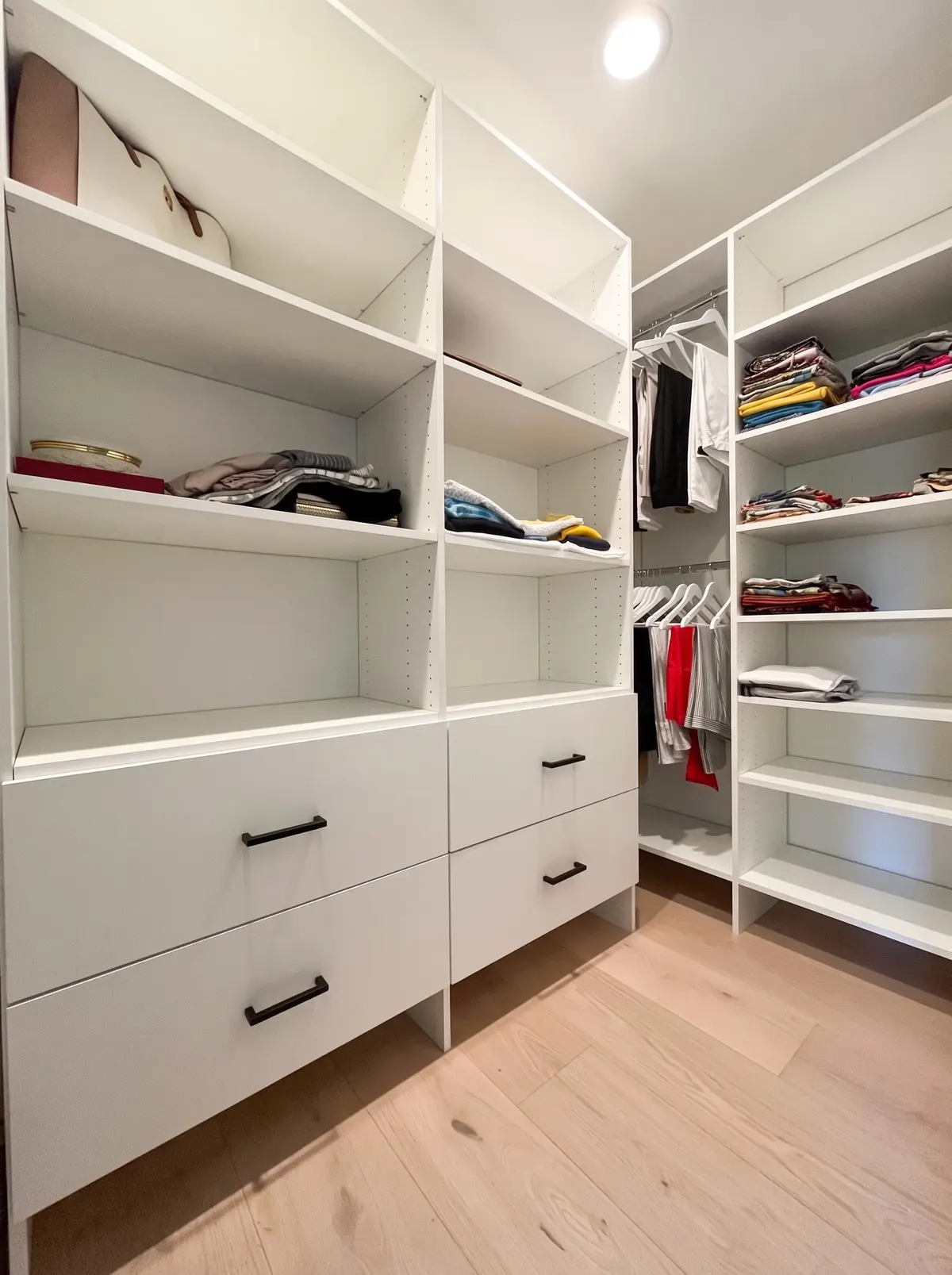
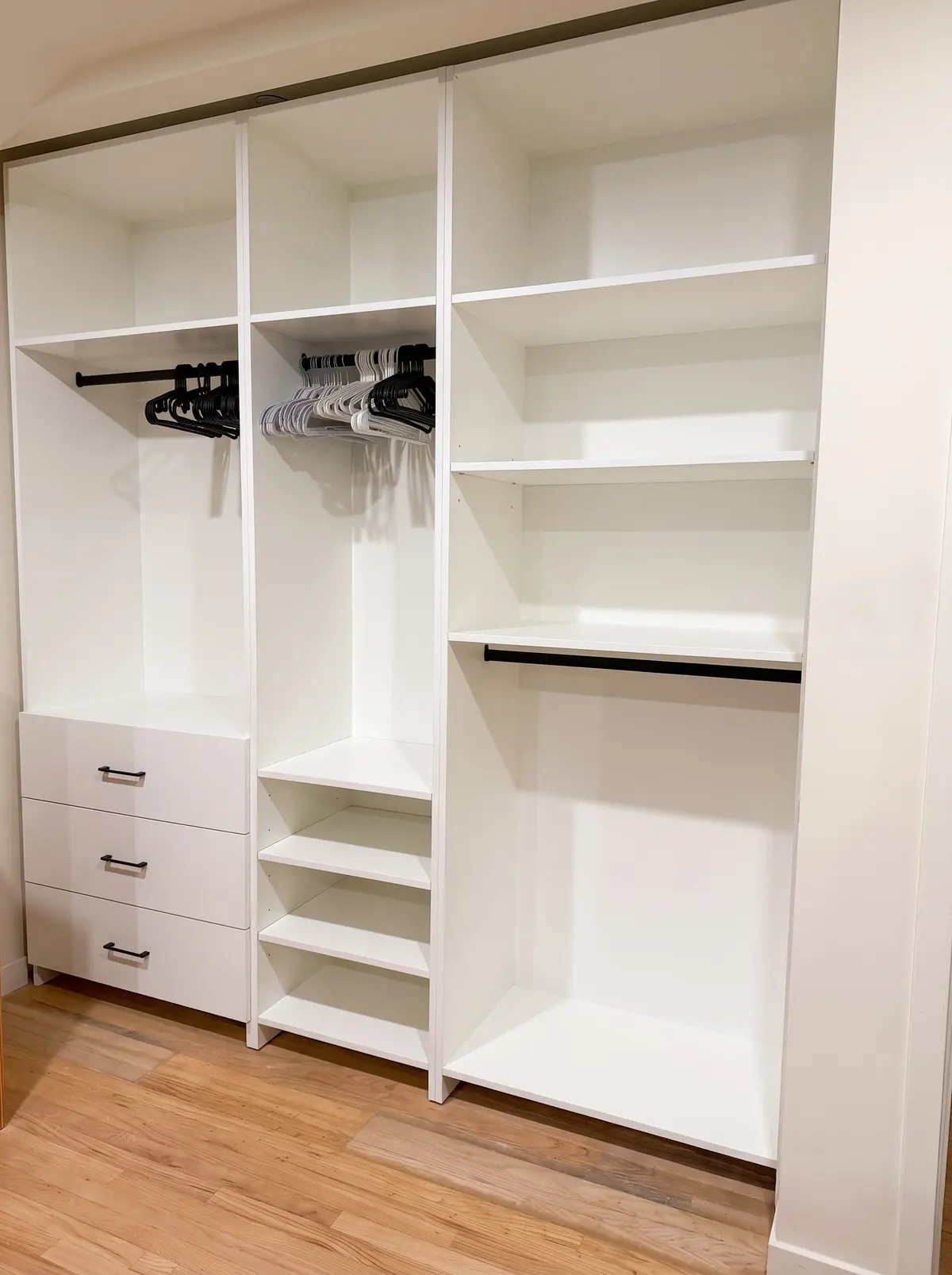
White melamine is the most popular choice in our walk-in and reach-in closets: it keeps the inside bright, which helps in rooms with little daylight, and it makes clothes easy to see.
Wood-look melamine: warmth without the upkeep
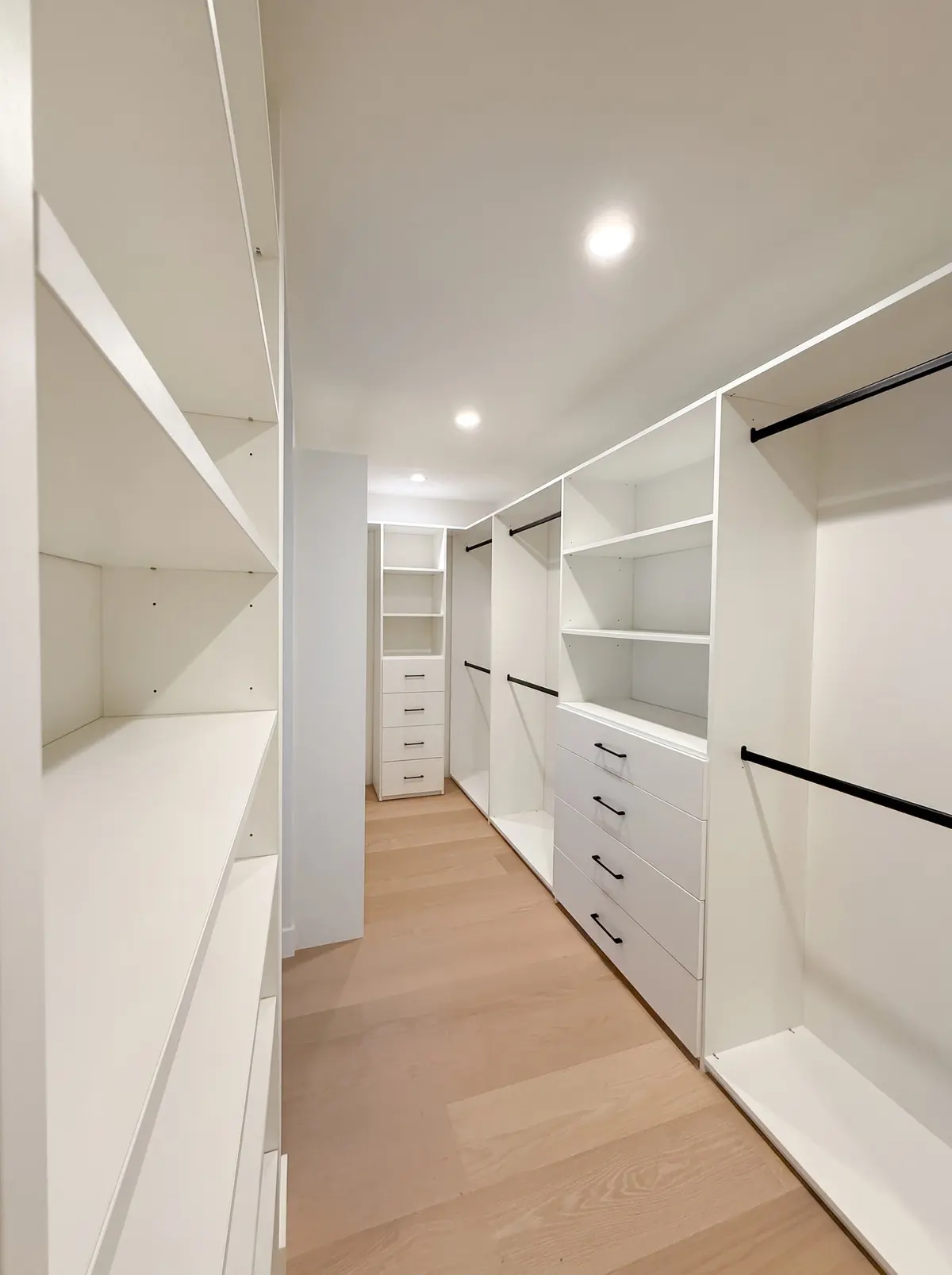
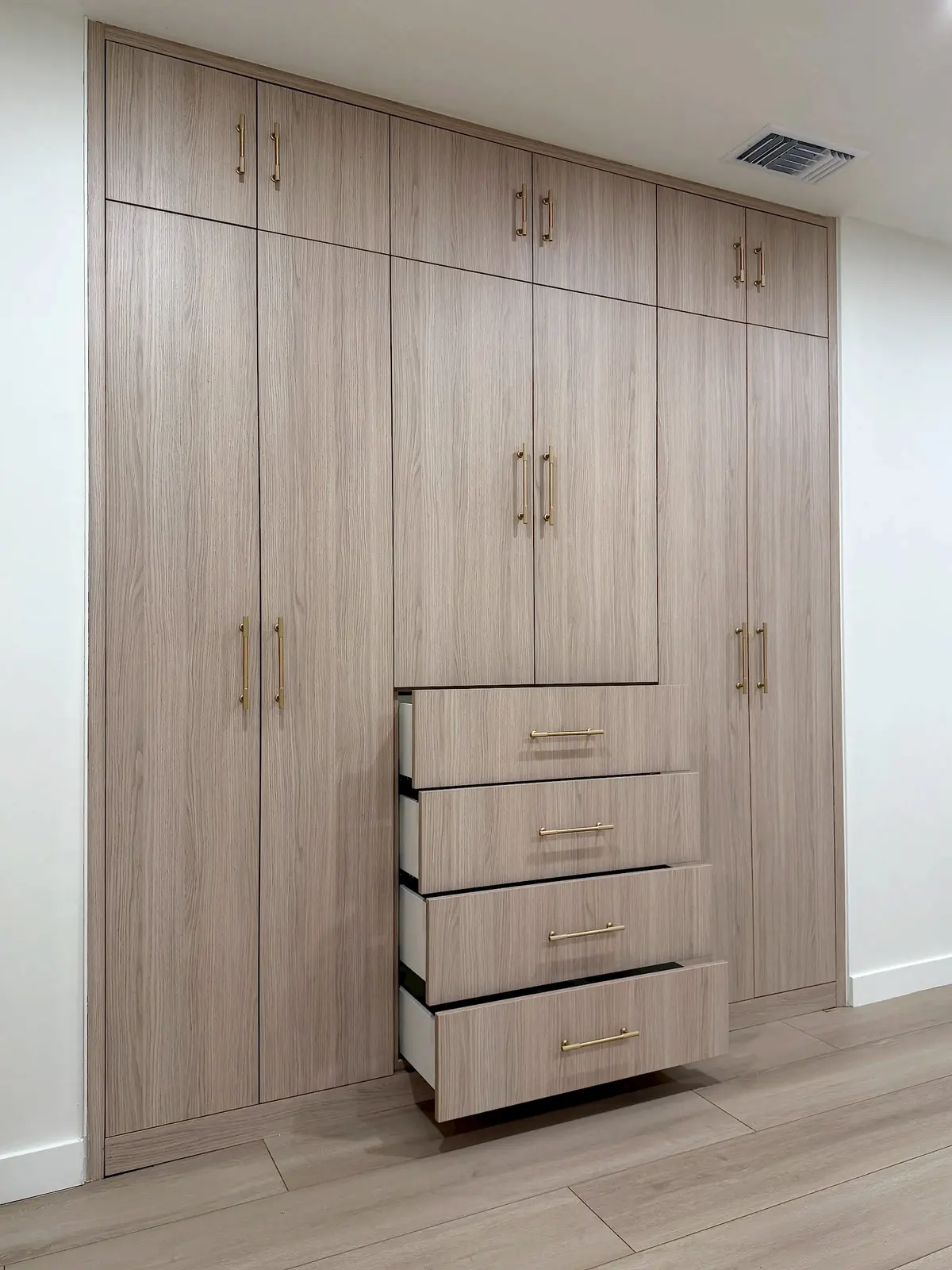
If white feels too clinical, a wood-grain melamine gives the warmth of timber with the same easy care. On Creemore Ln. in Tujunga we built a multi-wall wardrobe system entirely in wood-look melamine, with tall hanging sections, upper cabinets, internal shelving and a central bank of drawers. A second wall continues the same finish, so the room reads as one design.
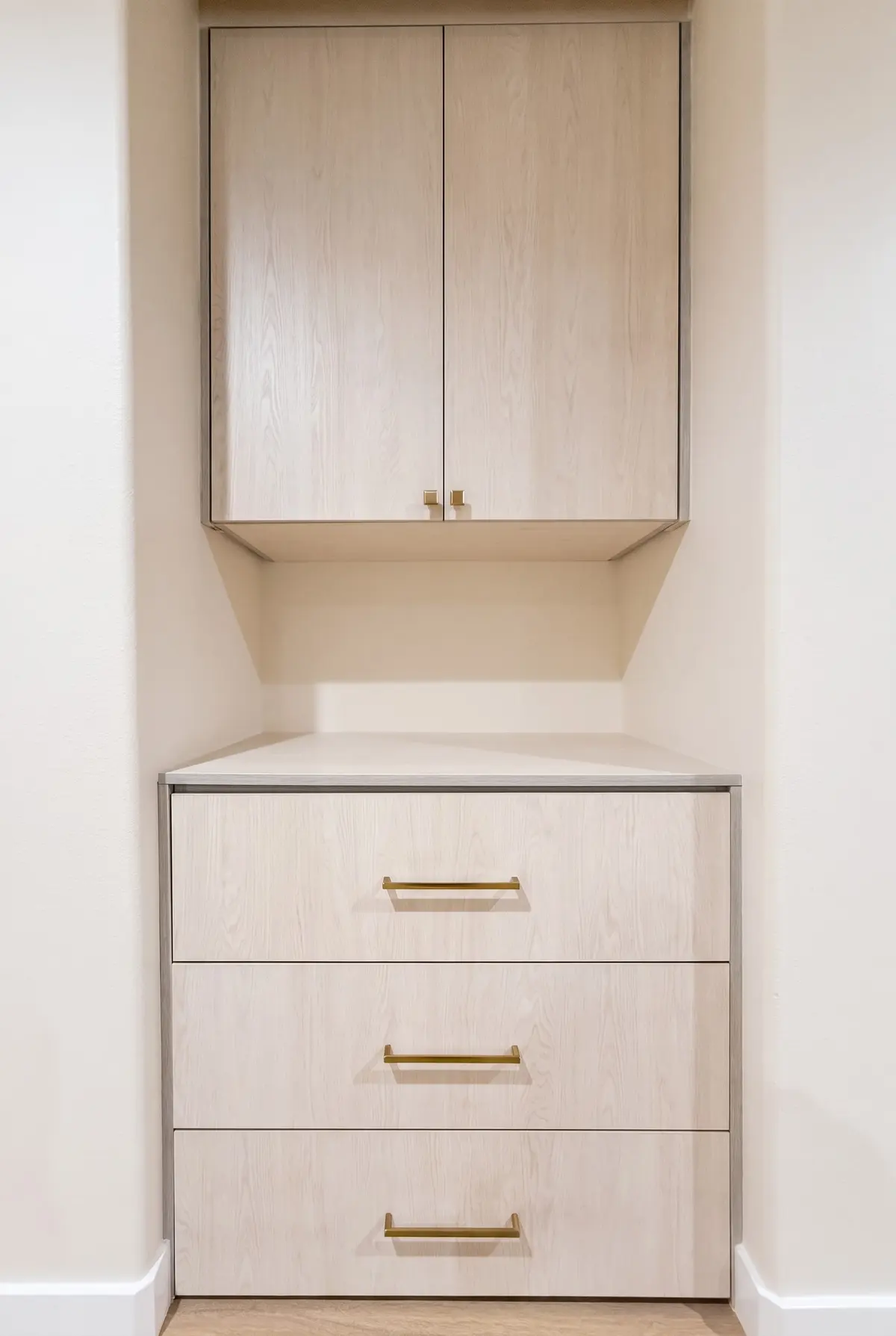
Wood-look finishes also work well for smaller built-ins. The Horsehaven St. wall unit in Sun Valley fills an existing niche with an upper cabinet and drawers in a wood-look finish, and looks like furniture rather than storage.
Matte panels and handle-free fronts
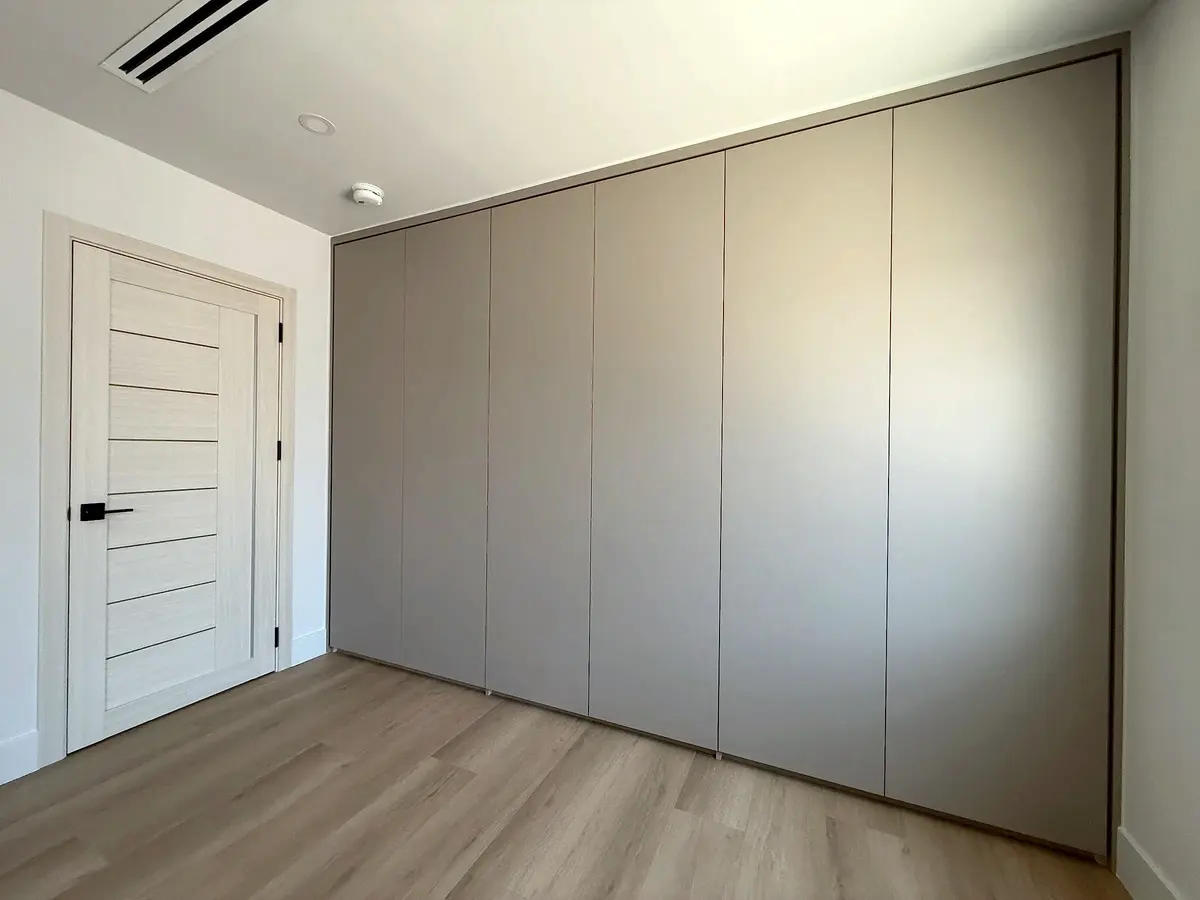
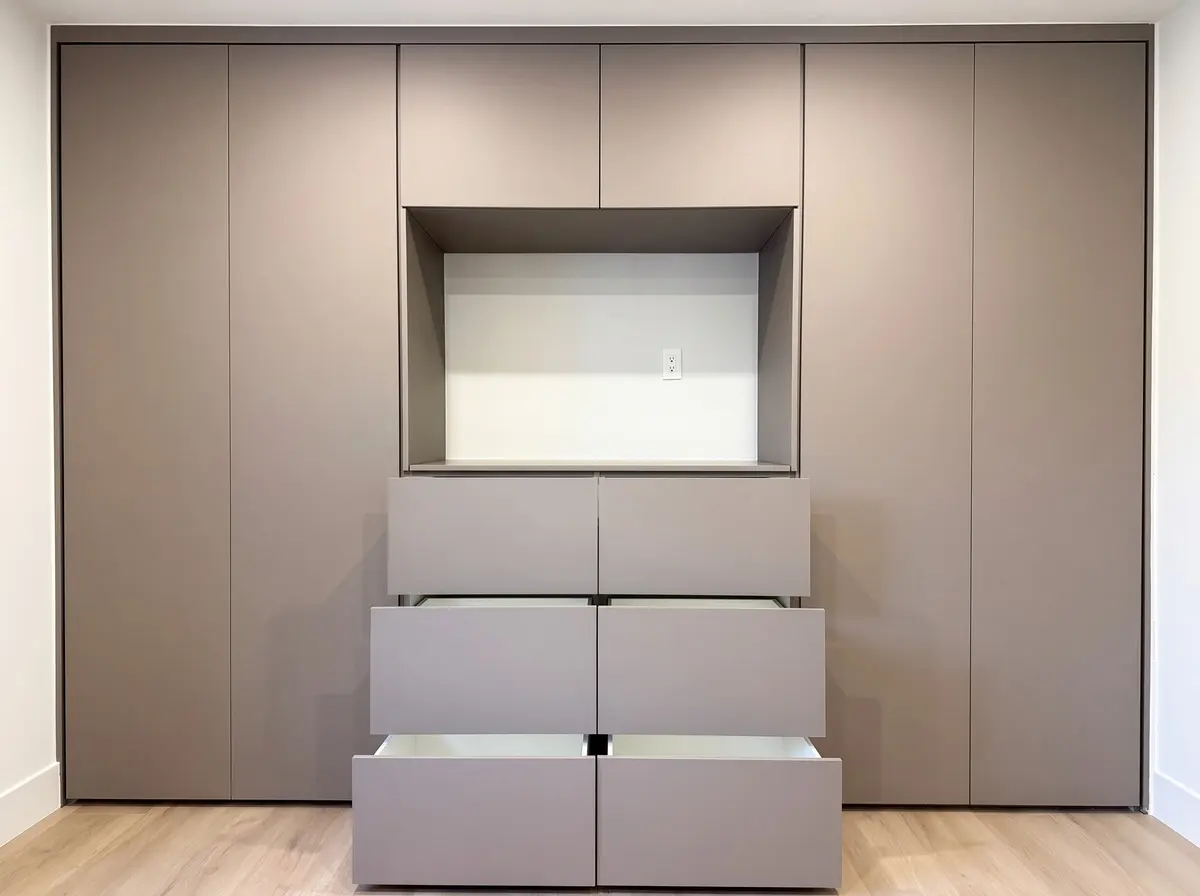
For bedroom wardrobes that are visible all day, many clients choose a matte melamine in a soft neutral color with push-to-open doors. On Mary Ellen Ave. in North Hollywood every bedroom wardrobe and the hallway storage use matte panels with no visible handles. The result is a calm, continuous wall that blends with the room.
"Laminate": what people usually mean
The word laminate is used loosely. In closets it often means melamine. Strictly speaking, high-pressure laminate (HPL) is a thicker, separately made sheet glued onto the panel; it is very tough and common on countertops and doors that take heavy wear. For most closet interiors melamine is the practical choice; if a surface will take unusual wear, we will tell you whether a tougher option makes sense.
Wood veneer with a factory lacquer finish
Wood veneer is a thin slice of real wood bonded to the panel. Finished with a factory-applied lacquer, it gives the depth, grain and feel of natural wood with a consistent, protective surface. It suits dressing rooms, bedroom wardrobes and living spaces where the cabinetry is part of the interior design.
Veneer asks for a little more care: it is real wood, so it can show wear in a different way, and like any natural material it varies slightly from panel to panel. Many clients combine materials: veneer on the visible doors and fronts, melamine inside where hangers and shoes do the work.
Mixing finishes inside one closet
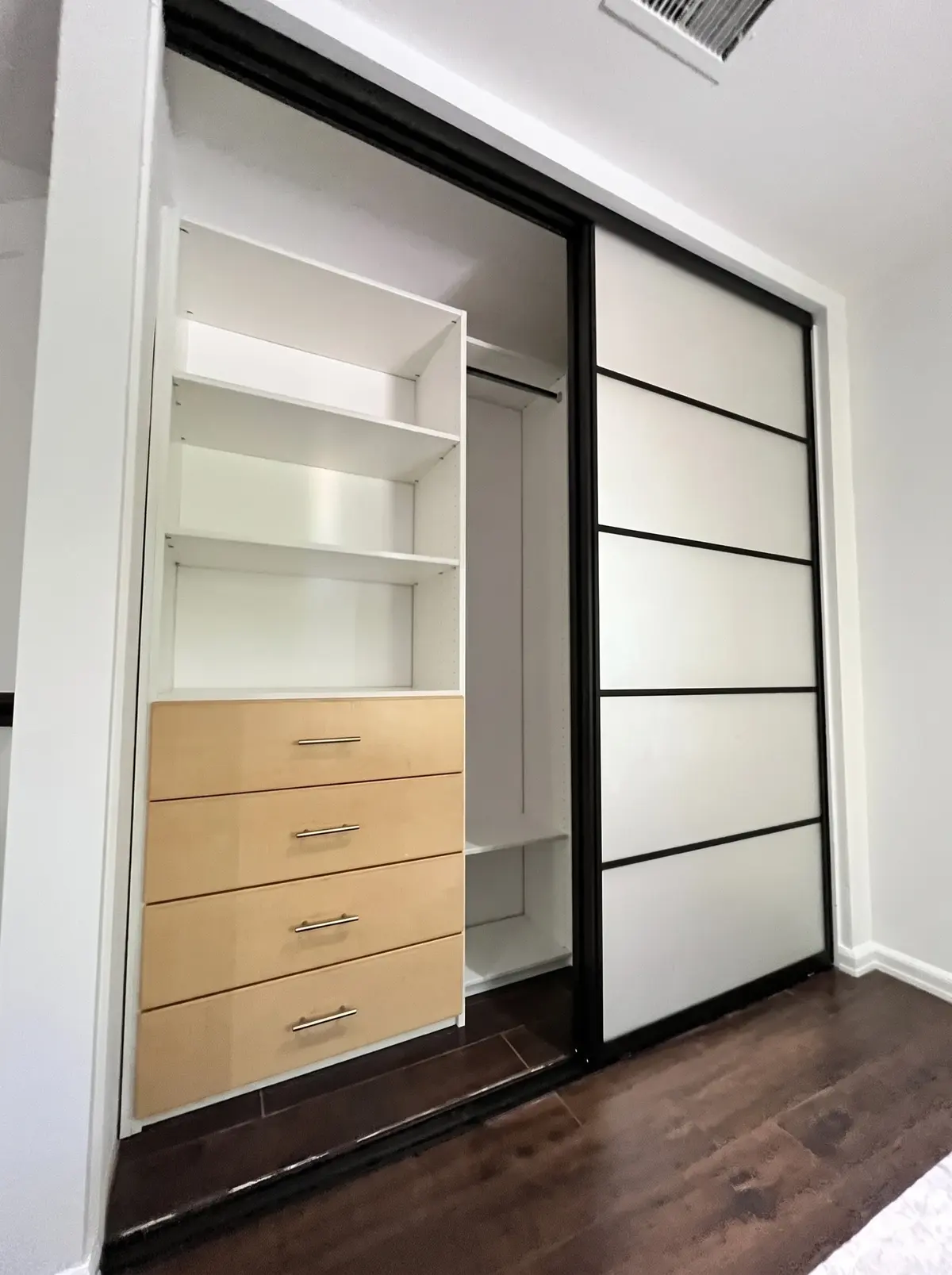
You don't have to choose one material for everything. The Towhee Dr. reach-in closet in Calabasas pairs white melamine shelving with warm wood-tone drawer fronts. The white keeps the interior bright, and the drawers add a touch of warmth exactly where your hand goes every day.
Quick comparison
| Finish | Looks | Care | Best for |
|---|---|---|---|
| White melamine | Bright, clean, uniform | Very easy | Walk-ins, reach-ins, kids' rooms, utility storage |
| Wood-look melamine | Warm, wood grain | Very easy | Wardrobes and built-ins visible from the room |
| Matte melamine | Soft, calm, modern | Easy | Handle-free bedroom wardrobes |
| Wood veneer, lacquered | Real wood depth and grain | Moderate | Dressing rooms, feature wardrobes, living spaces |
Hardware matters as much as panels
The finish is what you see; hardware is what you feel every day. Drawer runners, hinges and soft-close mechanisms decide whether the closet still runs smoothly in ten years. We work with lines from cost-effective options up to premium European hardware such as Blum, so you can decide where to invest: for example, premium runners on the drawers you open every day and simpler hardware on rarely used doors.
How to choose in practice
- Start with how you use the room. A closet used hard twice a day needs an easy-care surface. A wardrobe that faces the bed is also a piece of furniture.
- Look at samples in your own light. Colors and grains change between a showroom and a bedroom facing west. That is why we bring samples to every consultation.
- Decide where warmth matters. Wood looks are most effective on fronts and drawers; interiors can stay white.
- Keep it consistent across rooms. If you are doing several rooms, using one family of finishes makes the house feel planned.
See more finishes in our portfolio or read about our custom closets and wardrobe systems.
Frequently asked questions
Is melamine the same as laminate?
Not exactly. Melamine is a resin-soaked decorative paper fused directly to the panel. High-pressure laminate is a thicker sheet made separately and glued on. In everyday talk about closets, "laminate" usually means melamine.
Is melamine durable enough for a walk-in closet?
Yes. It resists scratches and scuffs and is easy to clean, which is why it is the standard surface for closet interiors.
Do you build closets from solid wood?
We build with engineered panels finished in melamine or in wood veneer with a factory lacquer finish. Veneer gives the look and feel of real wood while staying stable, which solid boards often don't in a closet.
Can I see the materials before ordering?
Yes. The in-home consultation is free and we bring material and finish samples, so you choose them in your own light. If you prefer, we can start with a video consultation and bring the samples to the measurement visit.