15 Closet Organization Tips from People Who Build Closets
The small decisions that make a closet easy to keep tidy, learned from measuring and installing closets in homes across Los Angeles.
After measuring and installing closets in homes across Los Angeles, our team has noticed a pattern. Closets rarely become messy because people are messy. They become messy because nothing has an obvious place, the most-used things are hard to reach, and the layout fights the way people actually get dressed.
Here are fifteen tips that work whether you are planning a new custom closet or making the most of the one you have.
Plan around what you own
1. Measure your clothes, not just the room
Before planning any hanging, take your longest dress, coat and pair of trousers on a hanger and measure from the top of the hanger to the hem. That number decides whether you need long hanging and how much. Most people need far less long hanging than they think, and far more double hanging.
2. Count by category
Count shirts, folded sweaters, pairs of shoes, bags. It takes twenty minutes and turns a vague wish ("more space") into a plan: so many feet of hanging, so many shelves, so many drawers. It is also the first thing we ask about at a consultation.
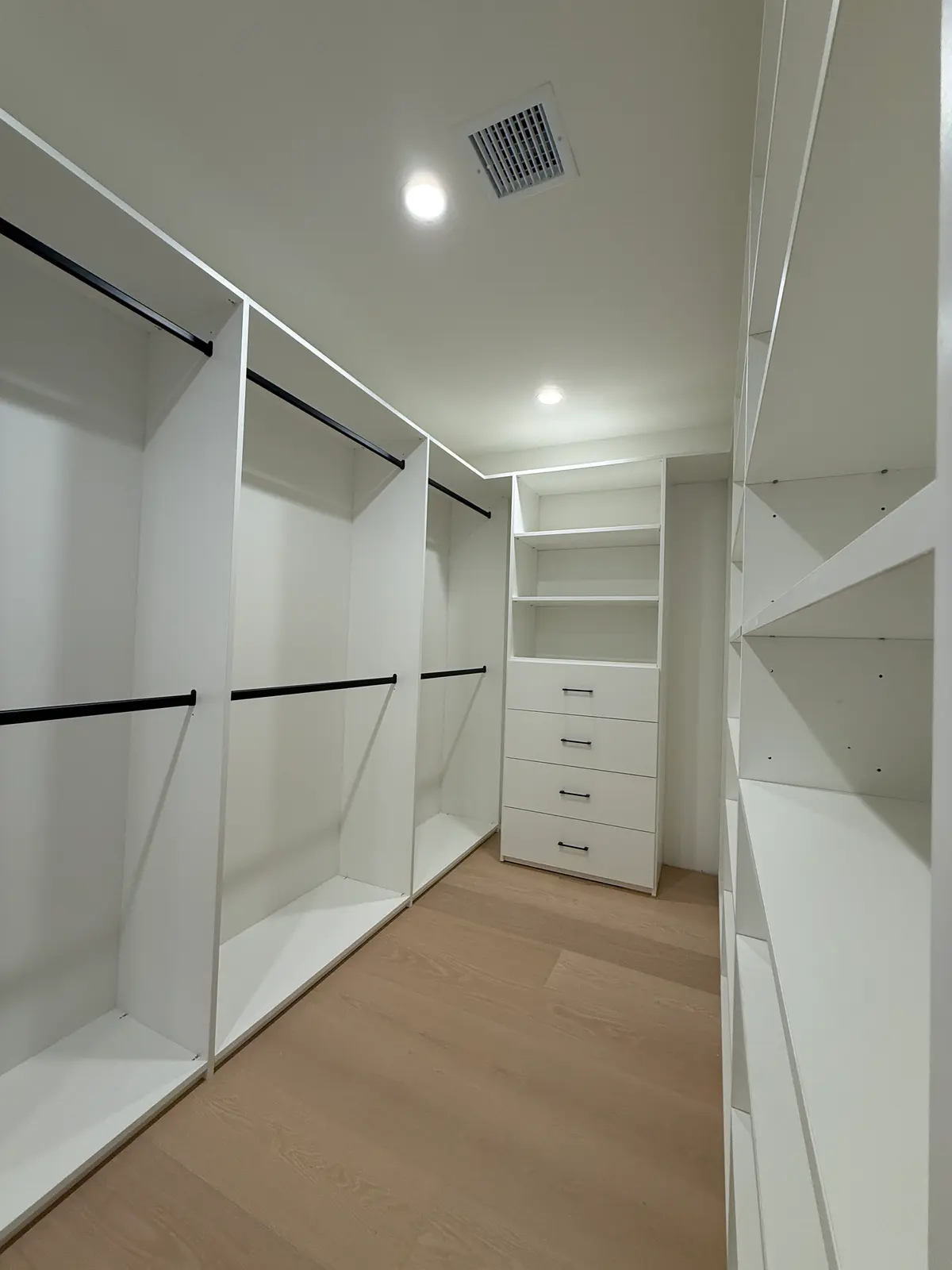
3. Make double hanging the default
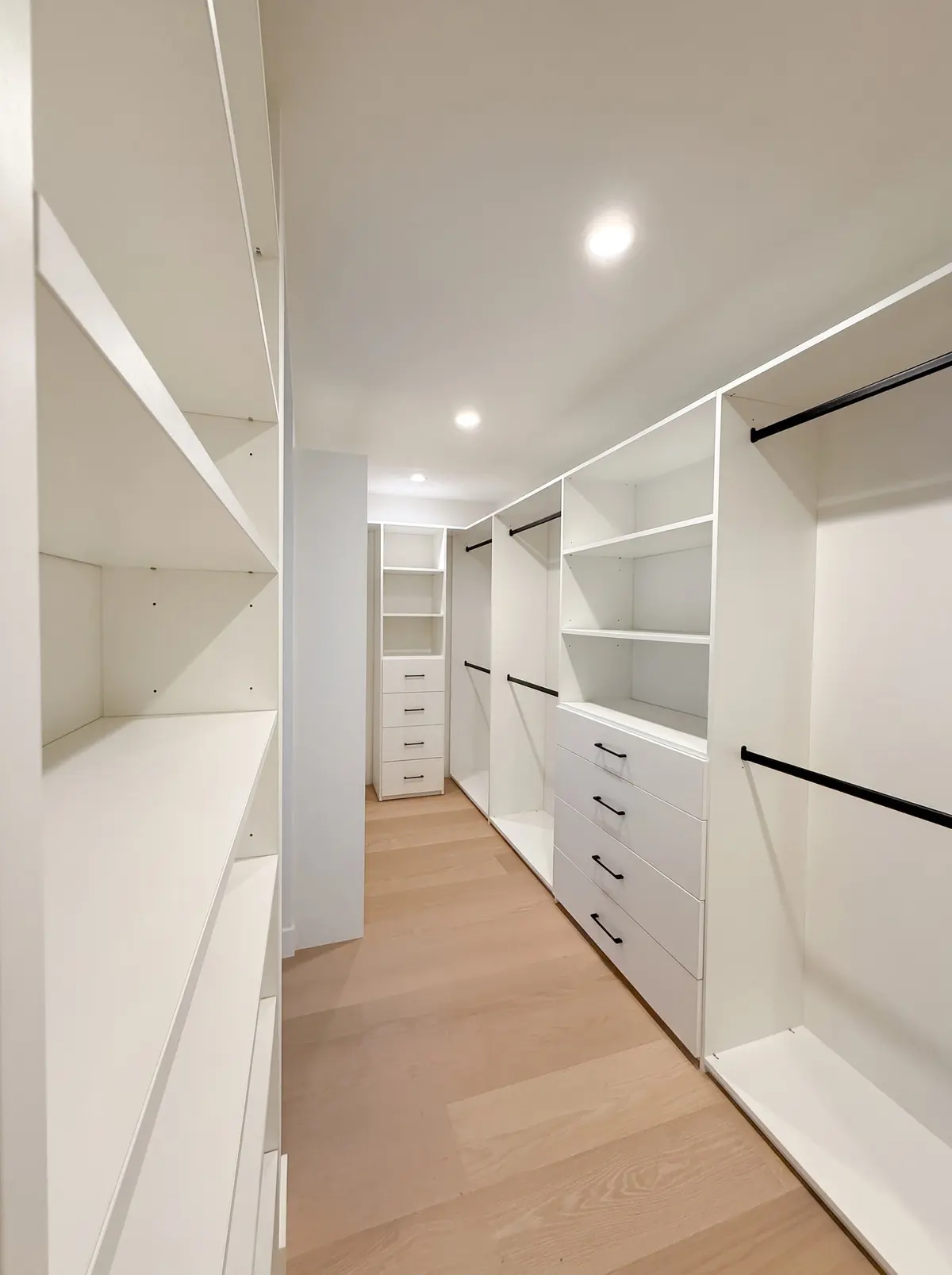
Two rods, one above the other, double the hanging length on the same wall. Shirts, jackets, skirts and folded trousers all fit comfortably. Keep one full-height section for long items and use the rest as double hanging.
Shelves and drawers
4. Keep folded stacks short
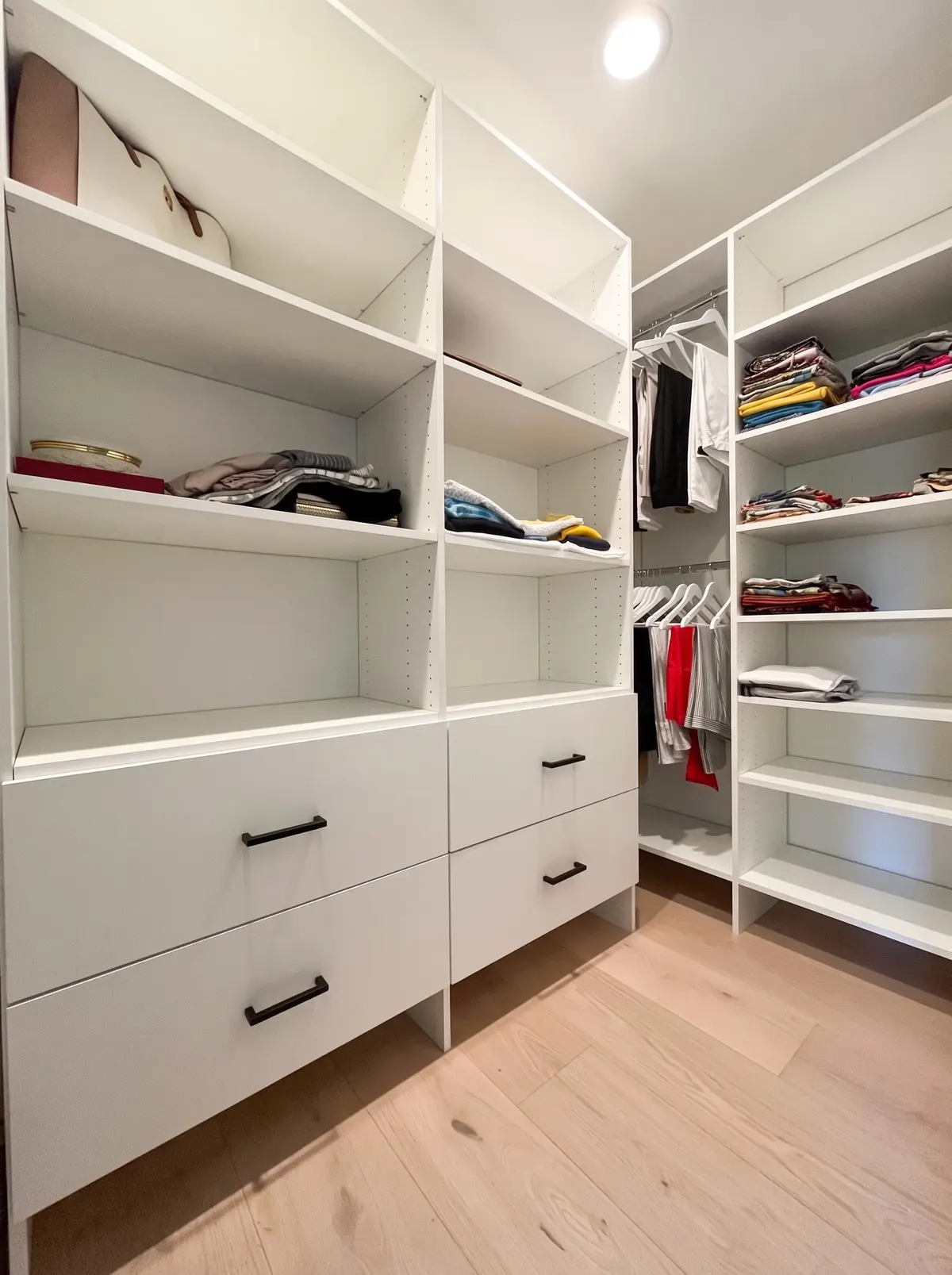
Shelves spaced about ten to twelve inches apart hold a neat stack of sweaters or T-shirts. Taller gaps invite tall stacks that topple the moment you pull one item out. Adjustable shelves let you fine-tune this later.
5. Put the shelves you use most between your hip and eye level
This is the "golden zone" of any closet. Everyday clothes go here; seasonal items, travel bags and spare bedding go on the top shelves.
6. Use drawers for anything small or soft
Socks, underwear, workout clothes, belts and watches disappear on open shelves. Drawers keep them contained. Shallow drawers (six to eight inches) are ideal for small items; deeper ones (ten to twelve inches) take sweaters and jeans.
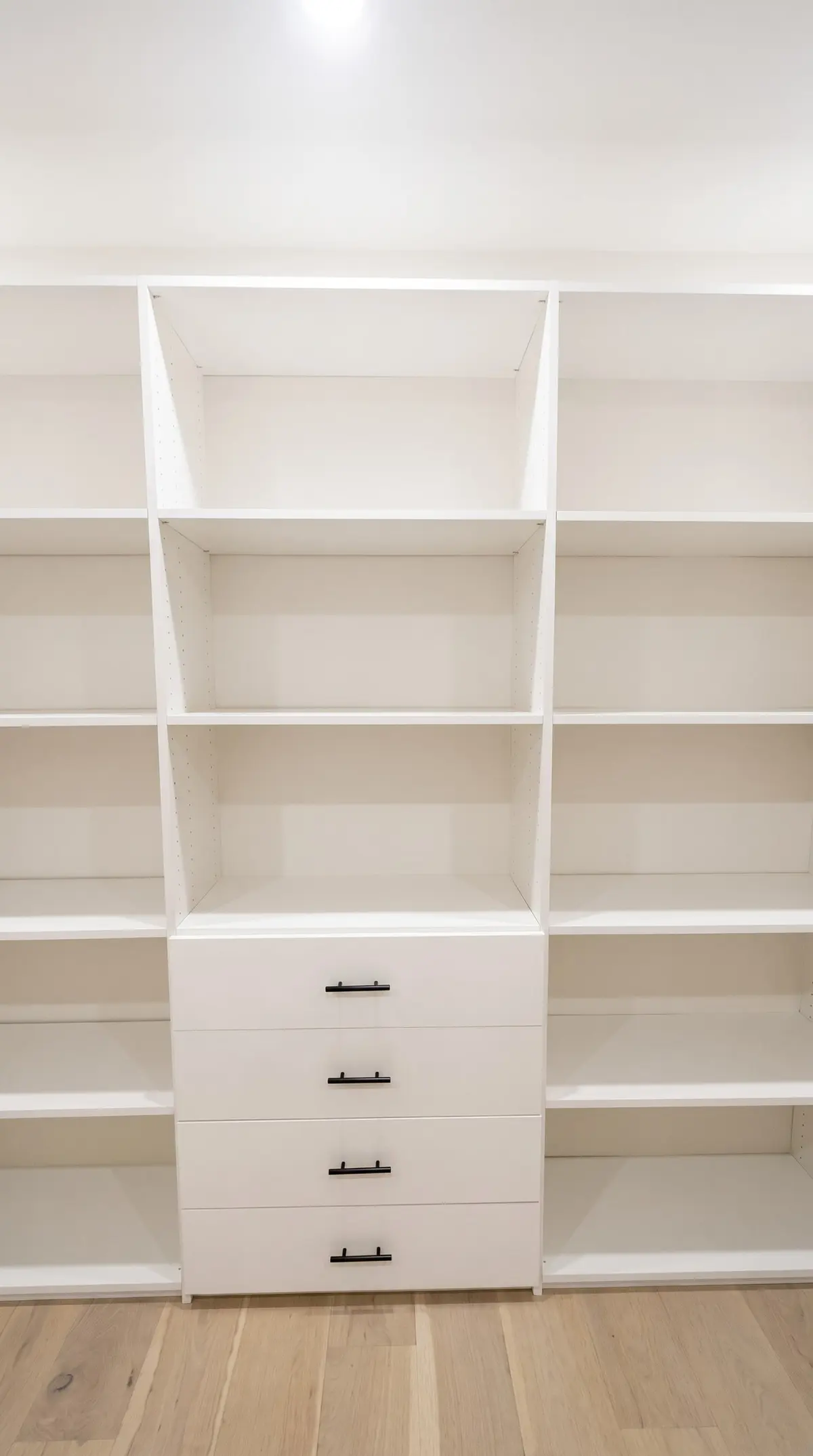
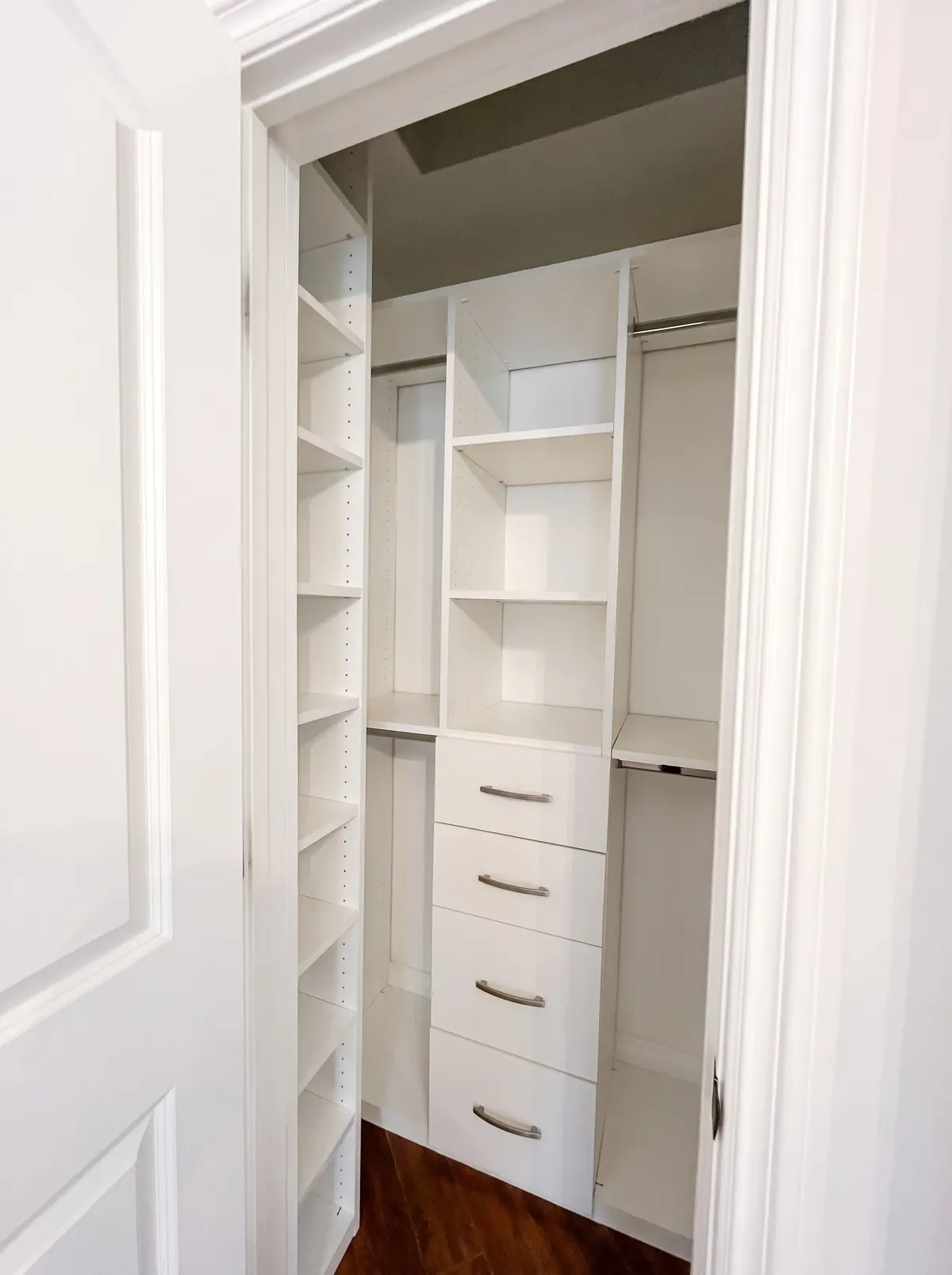
7. Place the drawer bank where you stand to get dressed
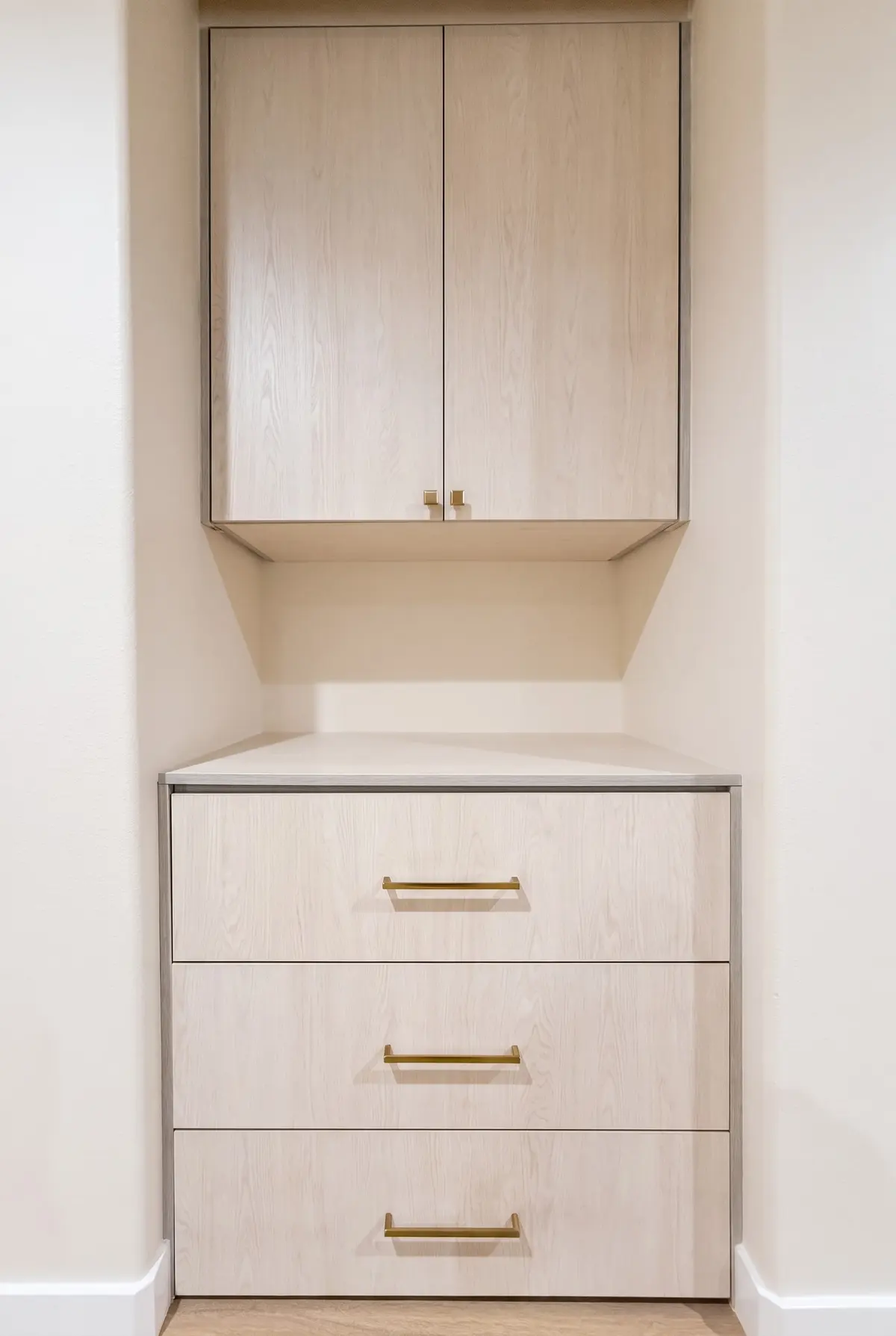
A drawer tower in the middle of the main wall, like the ones in our Glendale and La Crescenta closets, becomes the natural center of the room. You open it while standing in the most comfortable spot, not bent into a corner.
Shoes, bags and accessories
8. Give shoes their own shelves
Shoes stacked on the floor are the first thing to turn a closet into a mess. Dedicated shoe shelves, spaced for the height of your shoes, keep pairs visible. Tall boots need their own taller section.
9. Store bags upright with space around them
Bags keep their shape and stay findable when they stand upright on a shelf with a little space between them, instead of being piled into a basket.
10. Add a valet rod or a hook near the door
A pull-out valet rod or a simple hook gives tomorrow's outfit, or today's dry cleaning, a place that isn't the bed or a chair.
Light, doors and the room itself
11. Light the inside, not just the ceiling
A single ceiling light leaves shelves in shadow, especially deep ones. Integrated LED lighting on shelves or vertical panels makes colors easy to tell apart. It is best planned together with the cabinetry; see our closet lighting page.
12. Choose doors that don't steal floor space
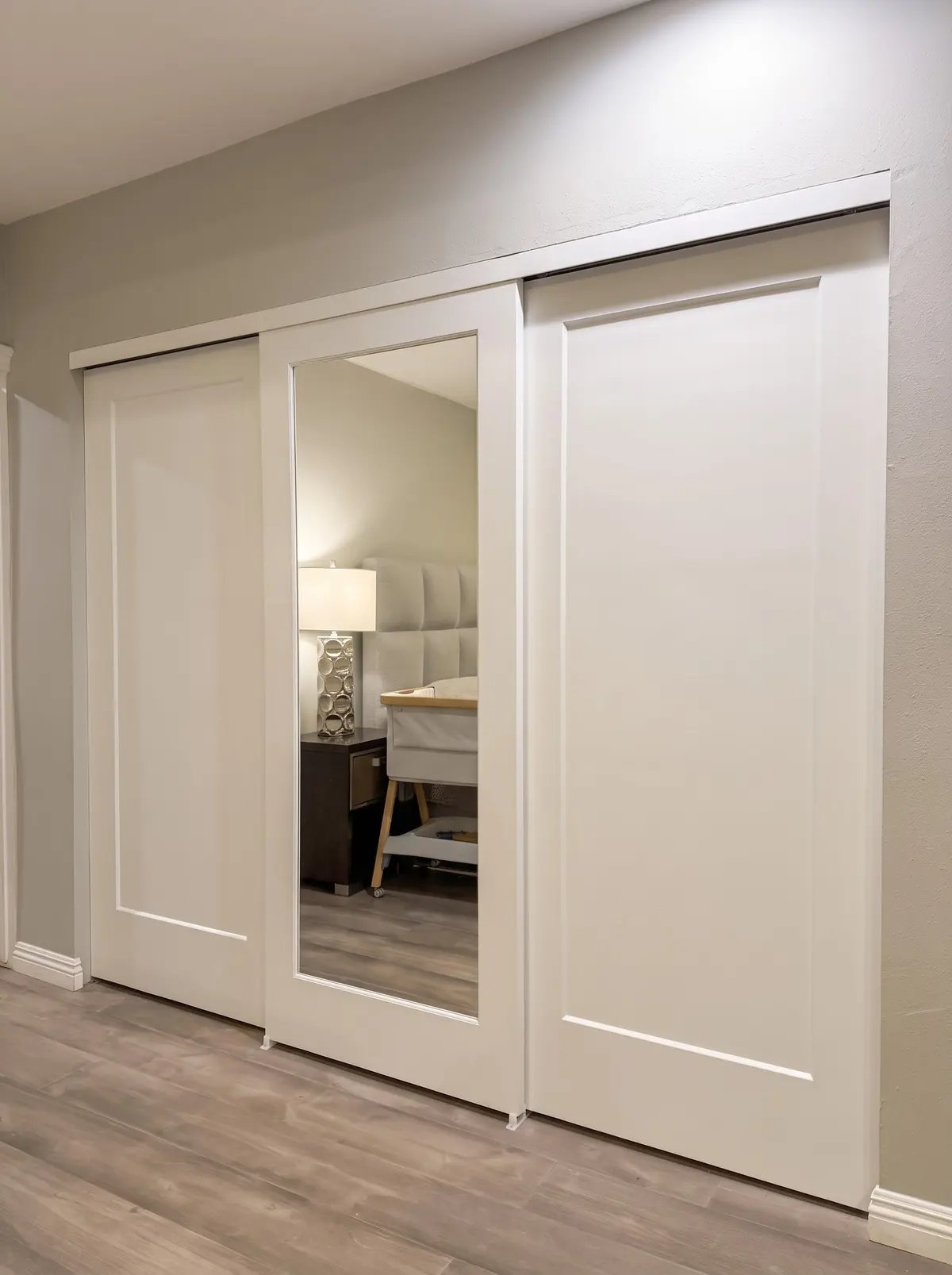
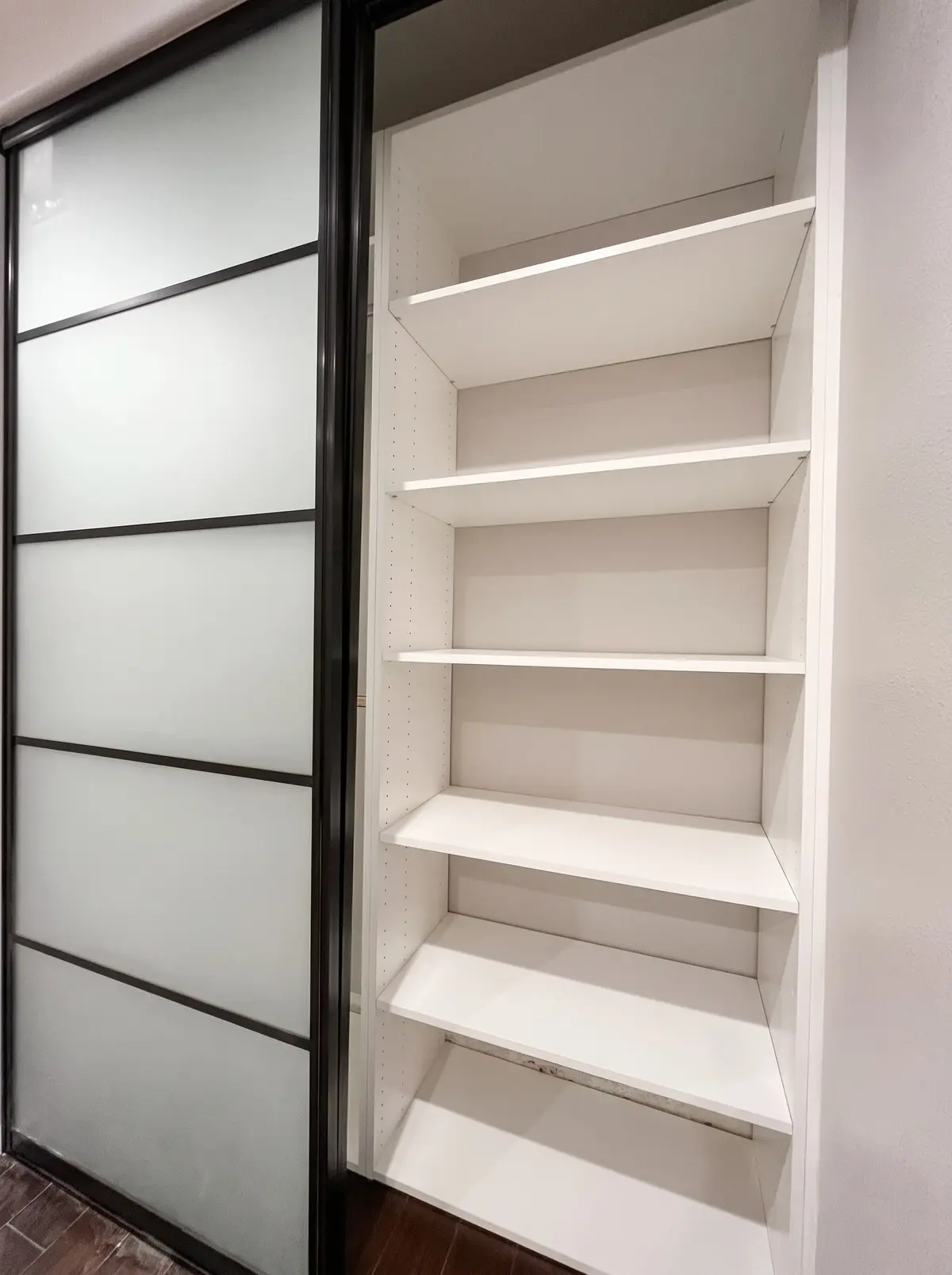
In bedrooms, sliding doors keep the floor in front of the closet free. Frosted glass hides the contents but keeps the room light; mirrors add a full-length mirror without using a wall.
13. Use the full height
Most closets have unused space above the top shelf. A full-height system with upper storage or an extra shelf adds real capacity for seasonal items, without taking anything away from everyday reach.
Habits that keep it tidy
14. Leave ten percent empty
A closet packed to the last inch is impossible to keep organized: every item you return has to be forced back in. Plan a little free space on every rod and shelf.
15. Edit twice a year
When the seasons change, move off-season clothes up high and take out what you no longer wear. A well-planned closet makes this a fifteen-minute job, because every category already has its place.
Bonus: ask before you buy organizers
Bins, dividers and hanging organizers solve problems that a good layout should not have. If you are planning a custom closet, wait until it is installed before buying organizers. Many of them will turn out to be unnecessary.
You can see how these ideas look in real homes in our portfolio, or read our guide to walk-in closet ideas from the San Fernando Valley.
Frequently asked questions
What is the best way to organize a small closet?
Use double hanging wherever possible, add drawers for small items, and use the full height of the closet. Keep the most-used items between hip and eye level and move seasonal items to the top shelves.
How far apart should closet shelves be?
For folded clothes, about ten to twelve inches between shelves works well. Shoe shelves can be closer, depending on the shoes. Adjustable shelves let you change the spacing later.
Is it worth adding lighting to a closet?
In most walk-in closets, yes. Integrated lighting makes shelves and drawers easy to see and colors easy to tell apart. It is easiest and cleanest when planned together with the cabinetry.
Can you reorganize the closet I already have?
We design and install complete custom systems. If your current closet doesn't work, we can measure it during a free consultation and propose a new layout for the same space.